- Verstreuen from GH
- Posts
- the language of discomfort.
the language of discomfort.
🟨🟦🟥 Verstreuen from GH

Grady Harwood
December 30, 2025

Welcome to Verstreuen, meaning “to scatter.” Each week I share highlights from my Workframe system, the process I use to turn books and notes into structured insights. Here, scattered ideas find connection and become something worth sharing.
Forwarded this email? Subscribe here for more
🗃️ This Week’s Highlights
This week's notes come from 17 new additions to the Zettelkasten - here’s the three that stood out most to share with you:
🟨 Your Emotions Aren’t Problems - They’re Instructions
🟦 Deadlines Feel Like Death Because You’re Framing Them Wrong
🟥 You Don’t Need More Clarity - You Need Less Distraction
🟨🟨🟨
“Average performers try to eliminate uncomfortable emotions. High performers learn to redirect them.”
Earlier this year, I moved to a new project and lost something I didn’t realize I depended on: structure.
My previous team had been run exceptionally well. Only after leaving did I understand how much that environment had been carrying me. The new project came with unfamiliar people, unclear dynamics, and pressure I hadn’t learned to navigate yet. Combined with a rushed move, it left me disoriented - professionally and personally.
At the time, I couldn’t see how this difficult season would lead to growth.
When my manager said to me “We feel that in order for you to grow, you need to move to another project,” it didn’t feel like a growth opportunity. But now, I understand what she meant.
What changed wasn’t the difficulty - it was how I interpreted the emotions that came with the season of change.
In High Performance Mindset - Part 3, DARZA frames emotions as signals, not obstacles:
Anxiety: signals a gap between preparation and challenge
Frustration: signals a failing approach
Anger: signals a violated boundary or unmet expectation
Sadness: signals loss or disconnection
The stress and pressure have been intense, but I’ve learned to use those emotional signals as tools. Instead of avoiding the discomfort, I’ve listened to what those emotions are telling me, to use them to solve problems more effectively.
📎 Takeaway: Emotions aren’t the enemy. They’re signals. Listen to them, learn from them, and let them guide you toward growth.
—🗃️—
🟦🟦🟦
“The proper function of the deadline (like death itself) is to encourage effort to accomplish one's purpose.”
Deadlines often cause anxiety - not because of the time limit itself, but because we interpret that limit as a threat.
When we see a deadline as a threat, it triggers stress, fear, and tunnel vision. But if we reframe it as a constraint, it becomes a structure that sharpens focus and clarifies priorities.
We tend to associate limits with lack. But constraints aren’t the same as scarcity. In fact, constraints can be helpful. They simplify choices, reduce decision fatigue, and lower cognitive load. In design, this is a strength: fewer options often lead to clearer outcomes.
Constraints narrow the possibility space.
Scarcity narrows our attention.
Scarcity triggers the brain’s threat response. Research by Shah, Mullainathan, and Shafir on the scarcity mindset shows that when we feel a lack of time, money, or resources we fixate on what's missing. This limits our ability to plan, think long-term, or be creative.
The difference is in how we frame it:
DEADLINES:
Scarcity lens: stress, overwhelm, paralysis - feels like survival is at stake
Constraint lens: focus, prioritization, clarity - feels like a challenge to meet
The real question isn’t whether limits exist.
It’s whether our mindset sees them as a threat or a problem to solve.
📎 Takeaway: Don’t fear deadlines. Reframe them.
—🗃️—
🟥🟥🟥
“You'll find clarity not by adding more, but by noticing what no longer pulls your focus.”
Over the past year, I’ve written a lot in this newsletter about clarity
not as a static trait, but as a response to tension.
Clarity emerges not through thought alone, but through effort, iteration, and structure. This quote from The Richest Man in Babylon hits at the heart of that idea: a vague desire doesn’t move you forward. A specific one can.
"I want to be successful" feels motivating - until you try to implement.
"I want to grow Mulch to 100 monthly users by March" creates pressure - but also direction.
Desire is only useful if it leads to a plan - and a plan requires a clear target.
Discomfort is often what forces that translation.
It’s the feeling that tells you your desire is under-specified.
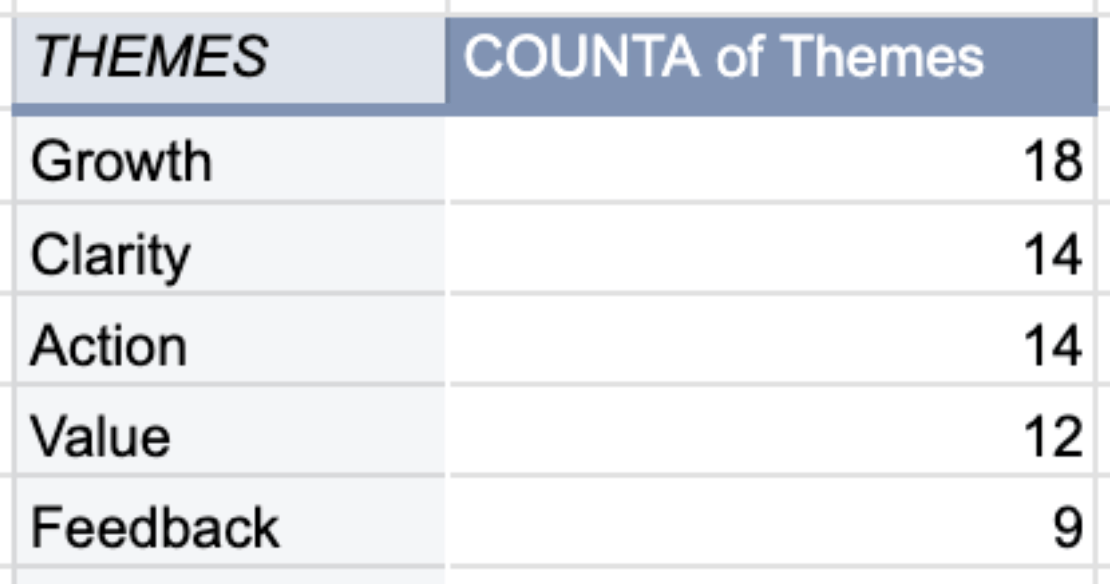
Across all the pieces I’ve written this year, a theme keeps coming back: clarity is built. Whether it’s setting a measurable goal, editing a draft to subtract away to its essence, or using a forcing function like a deadline or framework to surface what matters - the work becomes sharper when the vision is specific.
“Controlled exploration,”
-The Fire Triangle of Progress
“Clarity stronger than control,”
-Patience Isn’t Waiting: Lessons in Subtraction, Focus, and Flexibility
“Scaffolds that preserve curiosity,”
-The Energy of Creation
Each of these ideas has reinforced a single truth: if you can’t name what you’re after, you can’t move toward it.
And it’s not just about the goal - it’s about how you define and engage with it. The clearer your desire, the easier it becomes to reverse-engineer your actions and measure your progress. That’s how a vague longing becomes a meaningful pursuit.
📎 Takeaway: Vague desires blur the signal. Specific goals sharpen it.
Clarity is what happens when you learn to listen to discomfort and respond to it.
—🗃️—

Closing Thoughts
This year taught me that progress doesn’t start once things feel settled.
It starts when you learn how to read what’s unsettled.
Discomfort isn’t something to escape - it’s information about misalignment.
Deadlines aren’t pressure - they’re structure, revealing what actually matters.
And clarity isn’t found by thinking harder - it’s earned by removing noise until the signal sharpens and defining succinctly what you are aiming at.
Hard seasons don’t block growth.
They expose the systems you’ve been relying on and the ones you haven’t built yet.
Thanks for reading Verstreuen! 👋
Until next week
-GH
